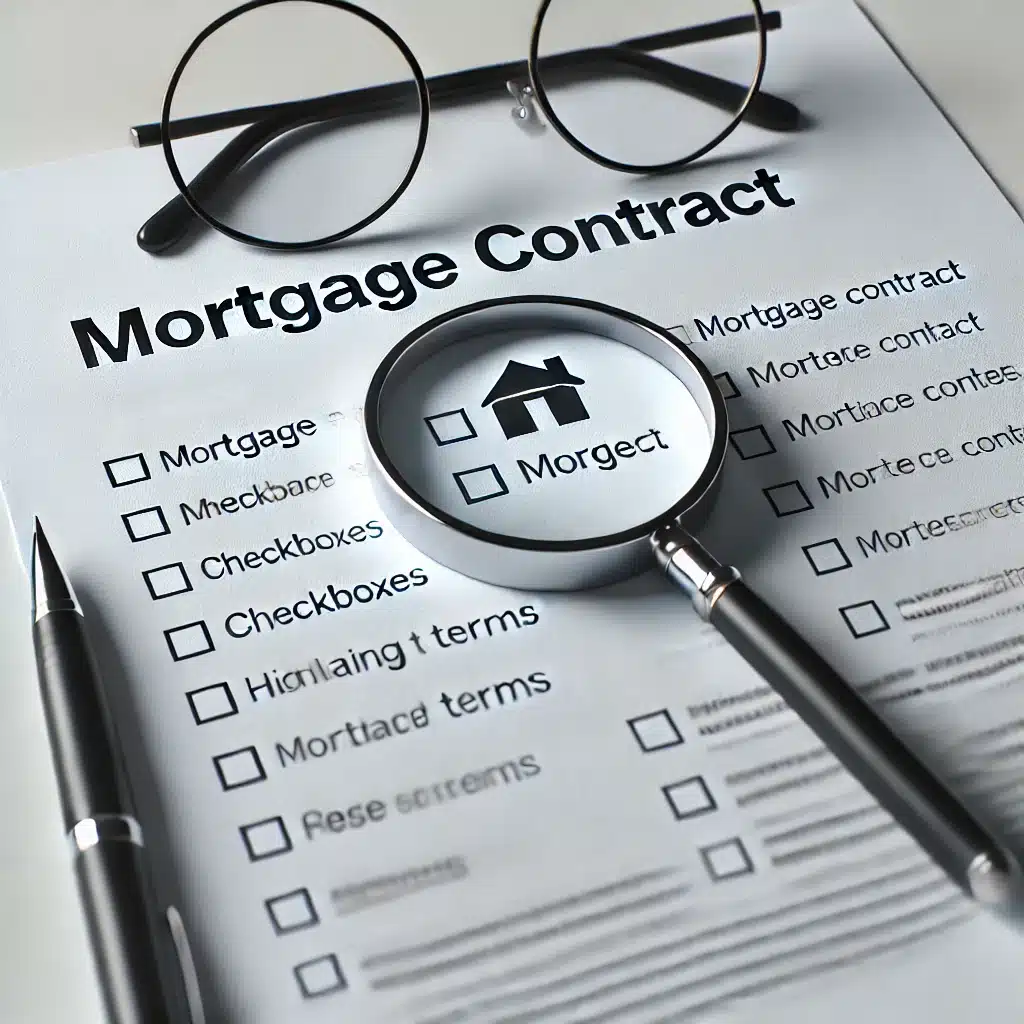
The mortgage contract is the legal document that formalizes the agreement between a client (borrower) and a bank (lender) to finance the purchase of a property. This contract defines the terms of the loan, the obligations of both parties and the rights to the property, which remains as collateral for payment. Given its long-term nature, it is crucial to review every detail before signing.
In this article, we explore the key elements of a mortgage contract, the aspects you should review and tips for signing it safely.
1. What is included in a Mortgage Contract?
The mortgage contract contains essential information about the loan, such as:
- Loan amount: The amount the bank lends to finance the purchase of the property.
- Repayment term: The agreed time to repay the loan (usually between 15 and 30 years).
- Interest rate:
- Fixed: Maintains a constant interest rate throughout the term.
- Variable: Depends on a reference index (such as the Euribor) plus a differential.
- Mixed: It starts with a fixed period and then becomes variable.
- Monthly installments: Amount to be paid each month, including principal and interest.
- Mortgage guarantee: The property remains as collateral; in the event of non-payment, the bank may foreclose on it.
- Commissions: Additional costs such as opening, early amortization or subrogation.
- Specific clauses: They may include conditions such as floor or ceiling clauses.
- Associated expenses: Details of expenses, such as appraisal, notary and registry fees.
2. Key Documents You Must Receive Before Signing
According to the 2019 Mortgage Law, the bank must give you certain documents at least 10 days before the signing:
- FEIN (European Standardized Information Sheet):
- Clear and detailed summary of the loan conditions.
- FIPER (Personalized Information Form):
- It includes information adapted to your case, such as interest, installments and terms.
- Simulation of quotas:
- Projections of how your installments would behave under different interest rate scenarios.
- Specific warnings:
- Details on clauses with risks, such as interest rate variations.
- Notarial certificate:
- Make sure you understand the terms of the contract.
3. Key Aspects You Should Review Before Signing
Before making a commitment, consider the following points:
Interest rate:
- If it is variable, check the reference index (usually Euribor) and the differential.
- Make sure you understand how the fees will fluctuate.
2. Specific clauses:
- Floor or ceiling clauses: These limit interest rate variations, but may restrict your profits if rates fall.
Product linkage:
- Some banks require additional products (insurance, cards, pension plans). Calculate if these links are really beneficial.
Associated costs:
- Verify which costs are borne by you and which by the bank:
- Paid by the bank: stamp duty (IAJD), notary’s office, registry, agency.
- Paid by the client: Appraisal of the property.
5. Amortization period:
- Evaluate if the term is adequate for your income:
- Longer terms: Lower installments, but higher total interest.
- Shorter terms: Higher installments, but you save on interest.
6. Commissions:
- Review the commissions for opening, early amortization, subrogation and other services.
7. Warranties and risks:
- Understand the implications of the mortgage guarantee; in case of non-payment, the bank can seize the property.
4. Common Mistakes When Reviewing a Mortgage Contract
Avoid the following mistakes:
- Failure to read the entire contract:
- Even if it is lengthy, review each clause.
- Do not compare offers:
- Accepting the first offer without comparing with other banks may cost you more in the long run.
- Do not consider interest rate fluctuations:
- If you have a variable mortgage, make sure you understand how your payments can change.
- Do not consult an expert:
- A lawyer or mortgage advisor can help you identify problematic clauses.
5. What to Do if You Find Abusive Clauses?
If you detect abusive or unclear clauses:
- Negotiate with the bank:
- Request modifications before signing.
- Consultation with a notary:
- The notary must explain the contract to you and point out possible problems.
- Formal complaint:
- If you consider that the conditions are abusive, file a complaint with the bank or the Bank of Spain.
- Seek legal advice:
- A specialized lawyer can help you challenge abusive clauses, even after you have signed.
6. Tips for Signing a Mortgage with Confidence
To make sure you make the best decision:
- Compare multiple offers:
- Ask for simulations in several banks and evaluate the conditions.
- Consult an expert:
- A financial advisor can help you interpret the terms and negotiate better conditions.
- Take advantage of the reflection period:
- You have at least 10 days to analyze the documentation before signing.
- Ask questions:
- Don’t be afraid to ask any questions about terms and conditions.
Conclusion: A Commitment That Requires Caution
The mortgage contract is a significant and long-term financial commitment. Carefully reviewing its conditions, understanding each clause and clarifying doubts before signing is essential to avoid future problems. With the right information and the right support, you will be able to make informed decisions and protect your finances.